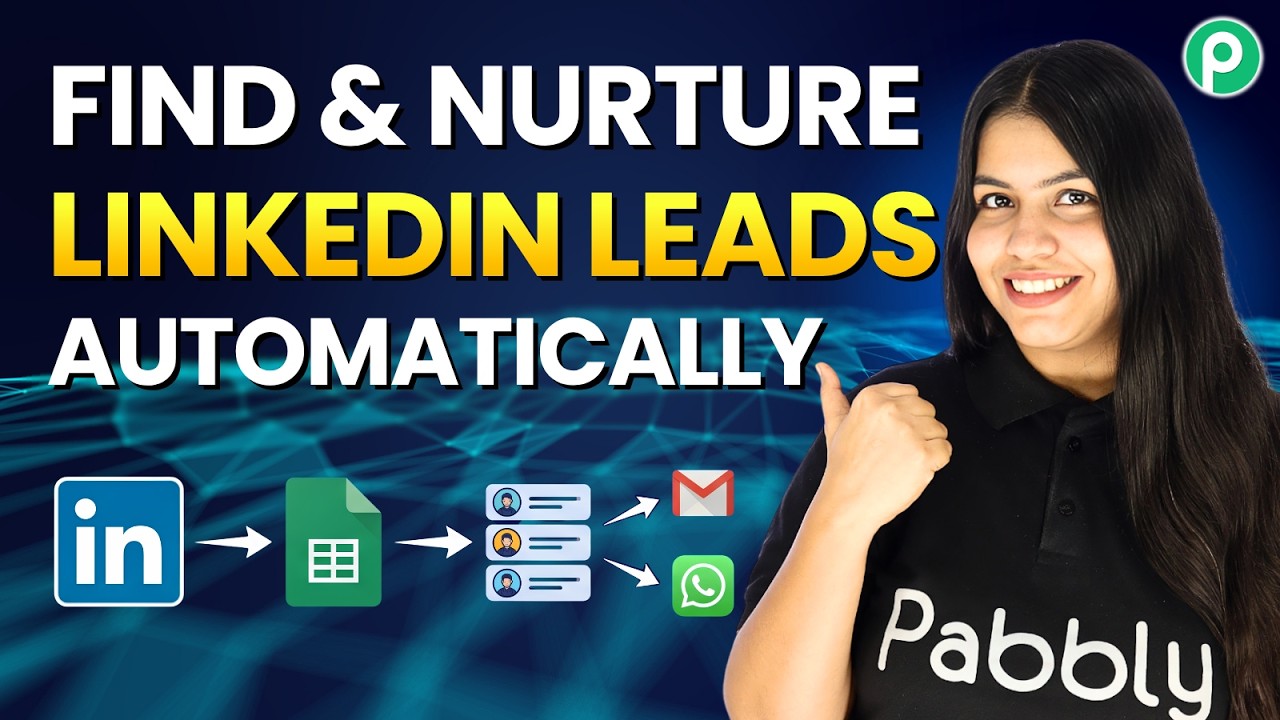
Watch Step By Step Video Tutorial Below
1. Accessing Pabbly Connect for Integration
To start integrating WhatsApp with LinkedIn leads, you need to access Pabbly Connect. If you are a new user, open your browser and search for pabbly.com/connect. This will take you to the Pabbly Connect landing page.
Once on the landing page, click on the “Sign Up for Free” button located at the top right corner. This allows you to explore Pabbly Connect with 100 free tasks each month, enabling you to nurture up to 100 leads. If you find it useful, you can later opt for a subscription plan.
2. Creating a Workflow in Pabbly Connect
After signing in to Pabbly Connect, navigate to your dashboard and click on “Create Workflow”. This is where you will set up the automation between LinkedIn and WhatsApp.
Next, you need to add a trigger. Click on the “Add Trigger” button and select LinkedIn as the application. For the event, choose “Lead Notifications” and click on “Connect”. If you’ve previously established a connection, select that; otherwise, create a new connection by logging into your LinkedIn account.
- Select LinkedIn as the trigger application.
- Choose “Lead Notifications” as the event.
- Connect your LinkedIn account to Pabbly Connect.
After successfully connecting, refresh the fields to capture lead details. Once you have the lead information, click on “Save and Send Test Request” to test the connection and capture the lead details effectively.
3. Nurturing Leads with WhatsApp Messages
Now that you have captured the lead details, it’s time to nurture these leads using WhatsApp. In Pabbly Connect, click on “Add New Action Step” to set up the WhatsApp message automation.
Select WhatsApp Cloud API or any other supported platform like Pabbly Chatflow for sending messages. Choose “Send Text Message” as the event and connect your WhatsApp account. Make sure to enter your WhatsApp number and map the recipient’s details from the previous step.
- Select WhatsApp Cloud API for sending messages.
- Map the recipient’s WhatsApp number using the data from the lead.
- Format your WhatsApp message to include personalized details.
After mapping the lead’s details, click on “Save and Send Test Request”. You should receive a confirmation that the message has been sent successfully, demonstrating that the integration works seamlessly through Pabbly Connect.
4. Automating the Lead Nurturing Process
With the WhatsApp messaging set up, you can further automate the nurturing process using Pabbly Connect. You can send automated emails, SMS, or add leads to your CRM, enhancing your lead management strategy.
To add more actions, click on “Add New Action Step” in your Pabbly Connect workflow. Choose the desired application for the action, such as email or SMS service, and set it up similarly to how you configured the WhatsApp message.
This flexibility allows you to create a comprehensive nurturing system that responds to leads in real-time. The automation will handle the follow-ups without manual intervention, saving you time and ensuring no lead is missed.
5. Conclusion
In this tutorial, we explored how to integrate WhatsApp and LinkedIn leads using Pabbly Connect. By setting up triggers and actions, you can automate your lead nurturing process effectively. This not only saves time but also enhances your engagement with potential clients.
Utilizing Pabbly Connect allows for seamless integration across various platforms, ensuring that your business can scale efficiently. Start automating your workflows today and experience the benefits of Pabbly Connect for your business!
PakarPBN
A Private Blog Network (PBN) is a collection of websites that are controlled by a single individual or organization and used primarily to build backlinks to a “money site” in order to influence its ranking in search engines such as Google. The core idea behind a PBN is based on the importance of backlinks in Google’s ranking algorithm. Since Google views backlinks as signals of authority and trust, some website owners attempt to artificially create these signals through a controlled network of sites.
In a typical PBN setup, the owner acquires expired or aged domains that already have existing authority, backlinks, and history. These domains are rebuilt with new content and hosted separately, often using different IP addresses, hosting providers, themes, and ownership details to make them appear unrelated. Within the content published on these sites, links are strategically placed that point to the main website the owner wants to rank higher. By doing this, the owner attempts to pass link equity (also known as “link juice”) from the PBN sites to the target website.
The purpose of a PBN is to give the impression that the target website is naturally earning links from multiple independent sources. If done effectively, this can temporarily improve keyword rankings, increase organic visibility, and drive more traffic from search results.